Monthly Archives: October 2015

Like I planned it

7

epistrohy7

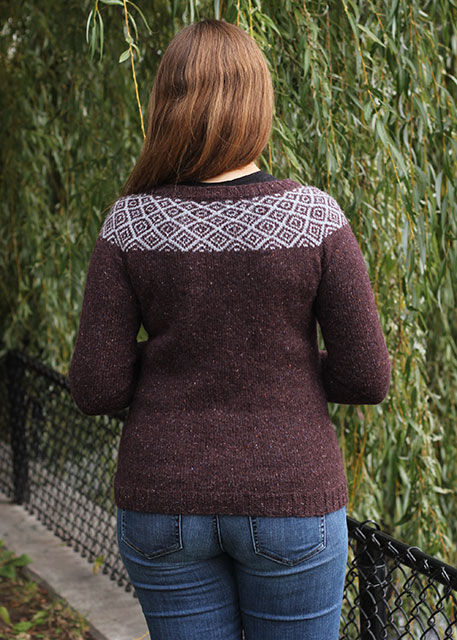
It wouldn’t quite be true to say that I planned to finish Epistrophy just as the weather turned cold, but sometimes the knitting knows what’s up even when you don’t. I started this sweater in March, knit the body up the arms and then put it aside in favour of various warm-weather projects.

After we moved to Ottawa, it came to my attention that this city is farther enough north to mean a noticeable change in the temperature as they seasons changed. (I knew this in an academic way before, but it’s something I *know* now.) I picked up Epistrophy again a couple of months ago and banged out the first sleeve pretty fast thanks to a weekend trip that involved a few hours in the car in each way. The second sleeve took a bit longer, and the yoke took longer still. My goal (articulated only to myself, as part of Slow Fashion October) was to have it finished by Thanksgiving (which was the Oct. 10-12 weekend), and I just squeaked in (though of course it took another two weeks to get photos).

epistrophy5

Epistrophy was a bunch of firsts for me: my first steek (I used Kate’s crochet steek tutorial and it wasn’t scary at all, though next time I’ll buy a smaller crochet hook — the scariest part, really, was trimming the steek, which meant removing all my carful reinforcing), my first time sewing ribbon facings into the button bands (it took forever and I’m not sure I did it quite right as they fronts sit a bit high. I should pull it out and redo it, but I’m worried about stressing the steek and also hate the though of all the work. I might try re-blocking it), and my first time knitting a Kate Davies pattern. This last one is what really kills me — I’ve been a fan of Kate’s designs since my earliest knitting days, and I own both her books and some of her single patterns. I don’t know why I hadn’t knit them before, but her instructions are excellent, and the results really do speak for themselves.

epistrophy6

I really, really love this sweater. Thanks to the yarn — Rowan Felted Tweed — it’s the perfect blend of lightweight and warm, and has enough ease to fit easily over long sleeves and button smoothly, but doesn’t sag or hang anywhere. I am, maybe weirdly, particularly happy with the sleeves. I find it hard to gauge how sleeves will fit when I’m knitting them bottom-up, and these ones are just the right length. They also fit exactly the way I wanted them to: enough ease to comfortably fit over a long-sleeves t-shirt (I haven’t yet tried it with the looser sleeves of a button-down shirt), but still snug enough to be flattering and easy to push up (I always push my sleeves up).

The only thing I’m not 100% happy with is the way the front neck sits up so close to my throat, and I’m pretty sure that’s my own fault for stretching out the button bands as I sewed on the ribbon. I’ll have to pull that out to fix it if it continues to bother me (maybe I’m just being sensitive), but really, that’s a minor (and very fixable) issue, and not enough to change how I feel about this cardigan: I love it!

epistrophy4

Sweaters are one part of my wardrobe where I don’t have to worry (yet, anyway) about having too much. Winter is long and cold, and when you add spring and fall into the mix, an assortment of sweaters in various weights and styles is just sensible! I am in the depths of holiday gift-knitting at the moment, but I don’t think it will be long until I have another sweater on my needles, and while my next one may not be one of Kate’s designs, it certainly won’t be long until I return to my library of her patterns — Ursula is looking mighty tempting right now, and I suspect Asta Sollilja  would find itself in heavy rotation once the weather turns really cold.
epistrophy8

Details
Pattern: Epistrophy by Kate Davies
Yarn: Rowan Felted Tweed DK in Treacle (main) and Scree (contrast)
Notes: The only changes I made to this pattern was to change the rate of the waist shaping in order to add length (I’m tall, and added 2.5 inches to the body length). I also added a bit of length to the sleeves, which reach just to my wrist bones (my preferred length). The chart was total pleasure to knit, and never have I had such an easy time matching both my button bands in length, and then lining up my buttonholes and buttons — the beaded rib pattern makes it so simple, and lies beautifully flat (and wrinkling in the above photos is due to lazy blocking). My buttons are these ones from Fringe Supply Co. Ravelled here.

I couldn't resist stacking up all my hand-knit sweaters after finishing Epistrophy. There's pretty good variety in that pile, though more light-weight and/or pullovers wouldn't go amiss.

I couldn’t resist stacking up all my hand-knit sweaters after finishing Epistrophy. There’s pretty good variety in that pile, though more light-weight and/or pullovers wouldn’t go amiss.

Loved + Worn

13

These two ideas, the Slow Fashion October prompts for this and last week, fit so perfectly together that I’m just going to pretend I planned it this way. I am very much a creature of habit. I like new things and change, but I also like what I like, whether that’s a certain item on a brunch menu, a cocktail or an item (or style) of clothing.

As a result, when I like something a lot, I will purchase — or, increasingly, make, it — in multiples. For me, this is beauty of being able to make my own clothes: I can find what I like, and then make it over and over again, with simple changes, like different colours or patterns. The garments I love most see weekly wear and, I’m almost embarrassed to say, I sometimes regret wearing them because that takes them out of rotation for the rest of the week (working in an office, even a casual one, means I try not to repeat too much Monday-Friday).

worn5

But, more than any other garment (or category of garments) in my hand-made wardrobe, the ones that are, for me, totally irreplaceable — the things that will keep me knitting for the rest of my life, because truly, there is no store-bought equivalent — is socks. I am almost self-conscious about bringing this up, since I have written quite a lot about socks, but the more I think about it (and I wrote a whole other draft of this post before I realized it), the more I think hand-knit socks are my ultimate symbol of slow fashion.

Socks are disposable items of clothing. Yes, you can spend quite a bit of money on fancy ones, but I don’t think I’ve ever met a person who didn’t wear their socks into the ground and then toss them without a second glance. But, at the same time, a great pair of socks is so, so great. I actually hated socks before I started knitting my own. I didn’t like that they required readjusting and that no matter what brand I bought, my feet were always cold, and I really didn’t like that when I finally did find a pair of socks I liked, they’d wear out within a year. Useless.

Socks were the second thing I learned to knit and in that first year I knit two pairs of worsted weight socks (I still have them both). I still remember the shock of switching to fingering-weight yarn and teeny tiny needles. It took me so long to knit that first lighter-weight pair, and then the next, and then the next. By the time I had a few pairs, almost without realizing it I stopped even looking at my drawer of store-bought socks. I was so proud of what I was making, and, almost more than that, I was proud of how useful they were!

For the last three or so years, I’ve worn hand-knit socks every day for about eight and a half months of the year. Although I now have more than a dozen pairs of hand-knit socks in regular rotation (that rotation doesn’t include lace socks or worsted-weight socks, which are worn as called upon by weather, etc.) three years ago, I only had about eight pairs of hand-knit socks, so there was a lot of washing (and, sometimes, multiple wears between washings) going on, and all those pairs saw a lot of wear. The thing about this kind of heavy rotation is that it means things wear out. This is especially true when you’re just getting started and your rotation is small.

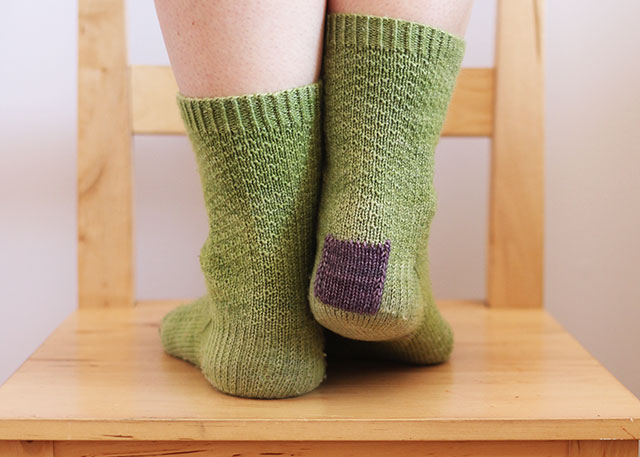
I used the knitted-on patch technique for this pair and it is holding up admirably.

Faded and worn. I used the knitted-on patch technique for this pair and it is holding up admirably.

Just as socks were the first garment that really showed me in a practical way the value of handmade (emotionally and philosophically, I understood it already), they were also my first foray into making a real effort to make my clothes last. I’m not wasteful, but I will admit a certain temptation to let a worn-out something go as a way to justify getting something new. This t-shirt is stained? Oh darn, guess I’ll just buy that new one I’ve been eyeing. I don’t (usually) shop for the sake of shopping, but the allure of something new when what you have is old is real.

I do mend my socks, and I take care with how I wash them to ensure they last. I have noticed, though, that my older pairs — faded, mended, maybe starting to felt and/or lose their shape a little — have been pushed to the edges of my rotation. I wear them around the house, or sometimes to bed, but they are dropping out of regular use, and I’m not sure what to do with them. Part of this dilemma, I will admit, is entirely selfish: I really enjoy knitting socks, but how many pairs does one person need? If I let some pairs drift out of use, that gives me an excuse to replace them, but is that just cheating? (Yes, I knit them for others too, but still).

I can’t be the only person who produces hand-made items faster than they wear out, but this is a side of the hand-made wardrobe we rarely talk about. I love my hand made items; I wear them daily; and even though I’m not producing at a frantic rate, I still outpace myself (and not just with socks — how many sweaters do I really need? How many pairs of mitts? Etc.). The next months of making are dedicated to holiday gifts, so I have some time to think about all of this, but still — do you notice this same dilemma in your own making? How to do you deal with it?

Slow Fashion October

2

Oh man, I had such big plans for this month. When Karen announced Slow Fashion October in mid-September I was so excited: What a great opportunity to write about all the things that have been jumbling around in my head since the spring; what a great excuse to really focus on what I am making and what I want to make; what a great way to push me into more regular blogging! But, alas, so far October hasn’t been any less busy than any other month, and I’m now three weeks behind and I’ve given up on the dream of catching up to Karen’s prompts.

Instead, here’s a rapid-fire version (I live in hope that next week I’ll have time to focus on this properly).

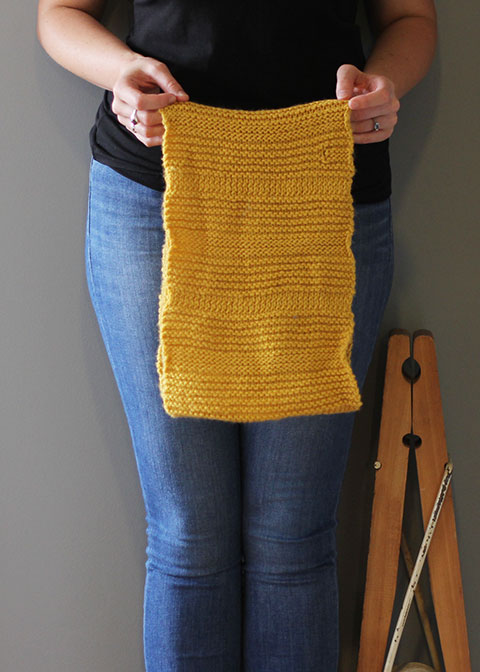
My first finished knit! It's a scarf/cowl, knit in 100% acrylic, and all the purls at twisted. I don't wear it anymore, but we do use it as a very effective tea cozy!

My first finished knit! It’s a scarf/cowl, knit in 100% acrylic, and all the purls at twisted. I don’t wear it anymore, but we do use it as a very effective tea cozy!

Week 1: You — I was very, very into crafts as a kid — beading, friendship bracelets, rug hooking (for a while), art, etc. — and did learn to knit then. But, it was slow, the needles were unwieldy and I put it aside without much thought. I came back to knitting when I was doing my masters. My sister had recently started knitting and I was was really inspired by what she was making, so when a couple of friends mentioned they’d be interested in learning, I was thrilled. From that initial scarf/cowl (knit flat and seamed) I immediately cast on for another cowl, and then took a sock class. I truly haven’t looked back since.

My progress with sewing has been slower, but overall I think my output has been better. I sewed off and on as a kid, using my mum’s ancient (but gorgeous) Singer. I made a lot of bags entirely from my own patterns (read: my coming up with an idea and cutting fabric without so much as sketching it first). I got a sewing machine for Christmas a couple of years ago, and that has really opened me up to making more of my own clothes. I still find sewing more of a hassle than knitting (it’s the set up mostly — I don’t have anywhere I can leave my machine out), but I’m enjoying it and can see myself improving, which is very encouraging.

Week 2: Small — This describes my overall handmade wardrobe, I’d say! That’s not a complaint, though. Having a small rotation of handmade garments to wear means that I really do wear them all (or, almost all) on a regular basis. My Scout Tees (most of which haven’t been blogged aside from Me Made May) get worn weekly, when it’s sweater season, it’s my handknit ones that I reach for, and the only time I wear store-bought socks is for sports (and only summer sports at that — for skiing, hiking, etc. I wear handknits).

Part of the reason for this smallness is because I’m slow. My work-life balance has been tipped in a decidedly “work” direction for a while now, and I don’t have the free time I used to. That means each thing I choose to spend time on takes more time, but also (in theory) ends up being a better piece. When you spend months knitting a sweater, you have way more time to think about fit, try it on, see how it’s working out, etc. Likewise, I spend a lot more time thinking about what I’m going to make, so when I’m free to start something new, I’ve really thought about all the ways I’ll wear or use that garment, which results in it getting lots of use once it’s done.

Epistrophy! I cast this on in March, and even though I haven't been knitting on it continuously for the last six months, that is rather a long time to have something on the needles. I'm so happy with it and the way it's turning out, and I can already tell it will be in regular rotation all winter.

Epistrophy! I cast this on in March, and even though I haven’t been knitting on it continuously for the last six months, that is rather a long time to have something on the needles. I’m so happy with it and the way it’s turning out, and I can already tell it will be in regular rotation all winter.

One of the other benefits to this slowness is that it means I make less in a year (this is not something I usually see as a positive, to be honest). I was thinking about this in relation to Karen’s prompts, and less output means I have more money to put toward each item, which allows me to pick and choose yarns and fabrics that I really like.

For example, knowing it would probably take three months to knit Sibella (no, I have not yet cast on. Soon though!), and that I would wear it for years, meant I could justify (to myself — I don’t think yarn purchases need to be justified in general) spending a little more to buy a sweater’s worth of Jill Draper Makes Stuff Esopus, a yarn I have loved from afar for a long time. I really love what Jill is doing with her yarns (local sourcing, environmentally friendly milling, hand dyeing), and I understand why they cost more because of that. Being slow let’s me support that, which is pretty great.

I thought I would be able to get to Week 3 here too, but honestly, if I don’t post this now, I might not (I already have a much longer version of Week 1 saved as a draft). Weeks 3 and 4 coming up!